Physical Computing:

Crafting a personalized assistive device

Physical Computing:

Crafting a personalized assistive device

ROLE

UX Research & Design


ROLE

UX Research

& Design


ROLE

UX Research & Design


SKILLS

User interviews,

Fabrication, Prototyping

SKILLS

User interviews,

Fabrication, Prototyping

CLIENT

CLIENT

TIMELINE

Jan – May 2025


TIMELINE

Jan – May 2025

OVERVIEW

ACHIEVA is...


a group home for individuals with disabilities in the West View neighborhood north of Pittsburgh.

ACHIEVA is...


a group home for individuals with disabilities in the West View neighborhood north of Pittsburgh.


OUR TASK:


Create an assistive device for the residents. In particular, something that is useful and relevant for our client, driven by their wants or needs and nobody else's.

OUR TASK:


Create an assistive device for the residents. In particular, something that is useful and relevant for our client, driven by their wants or needs and nobody else's.


MY ROLE:

I conducted user research, helped fabricate the device and carried out user testing with our client, successfully creating a prototype of reasonable robustness.

OUTCOME
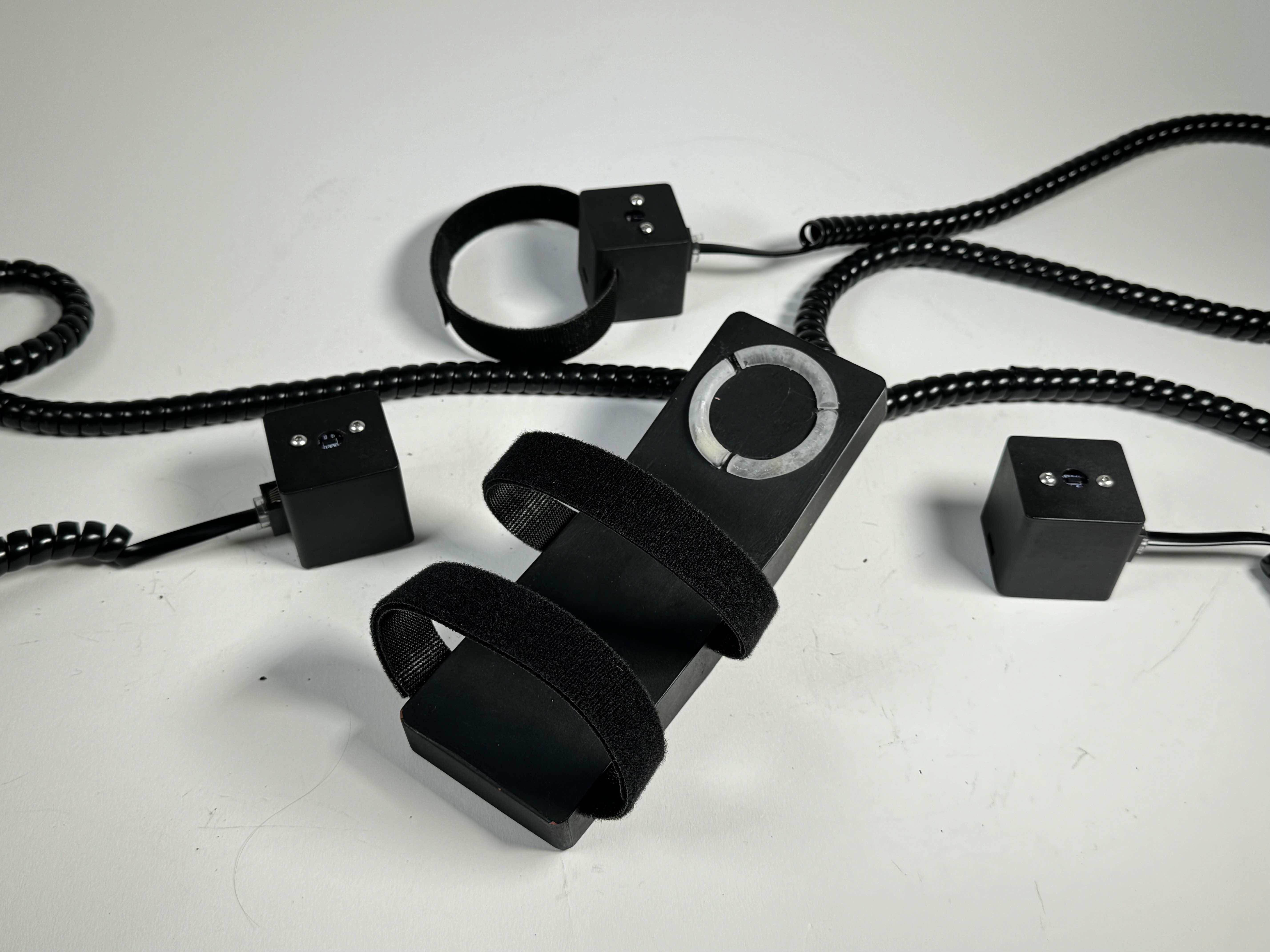
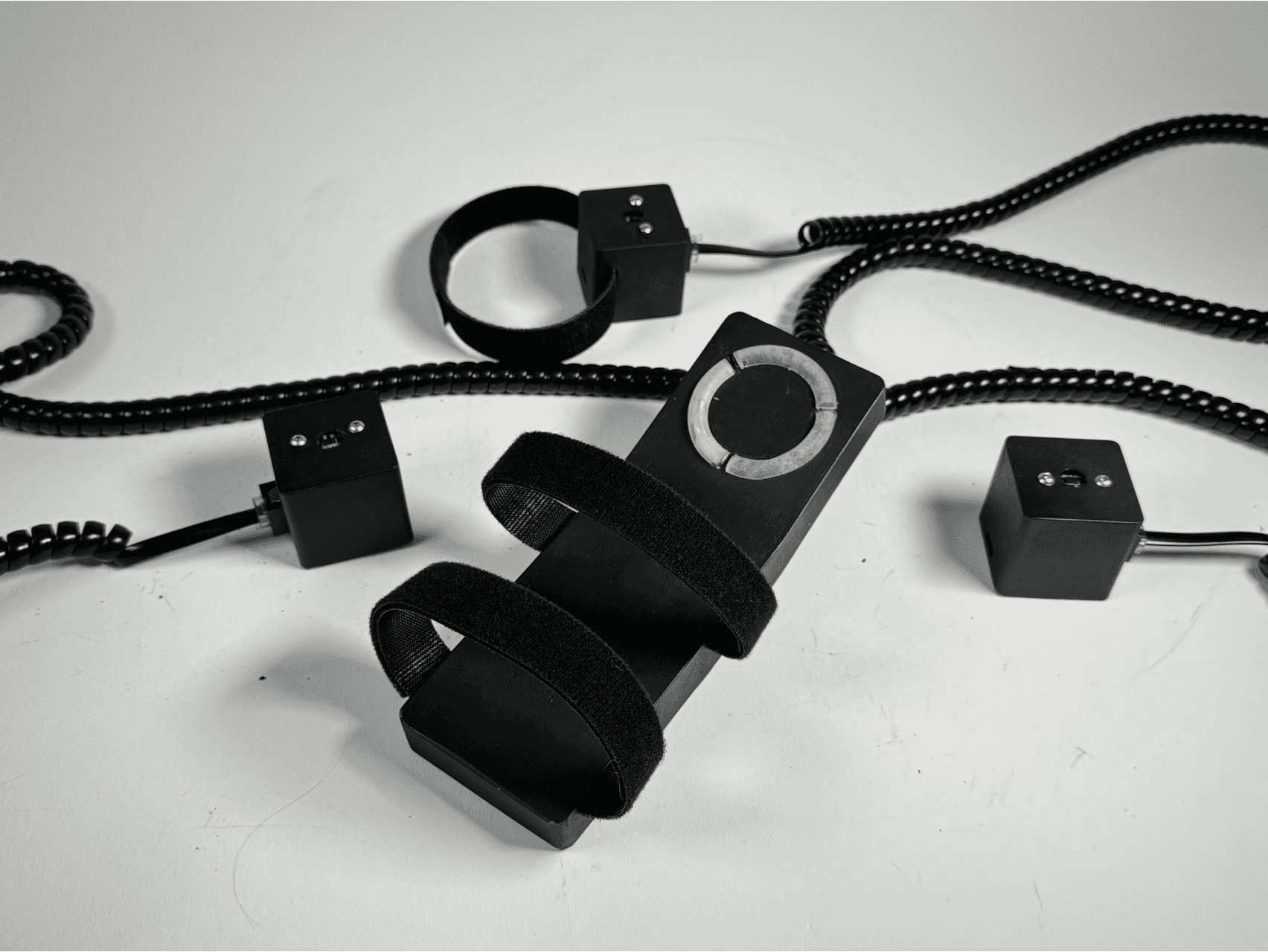
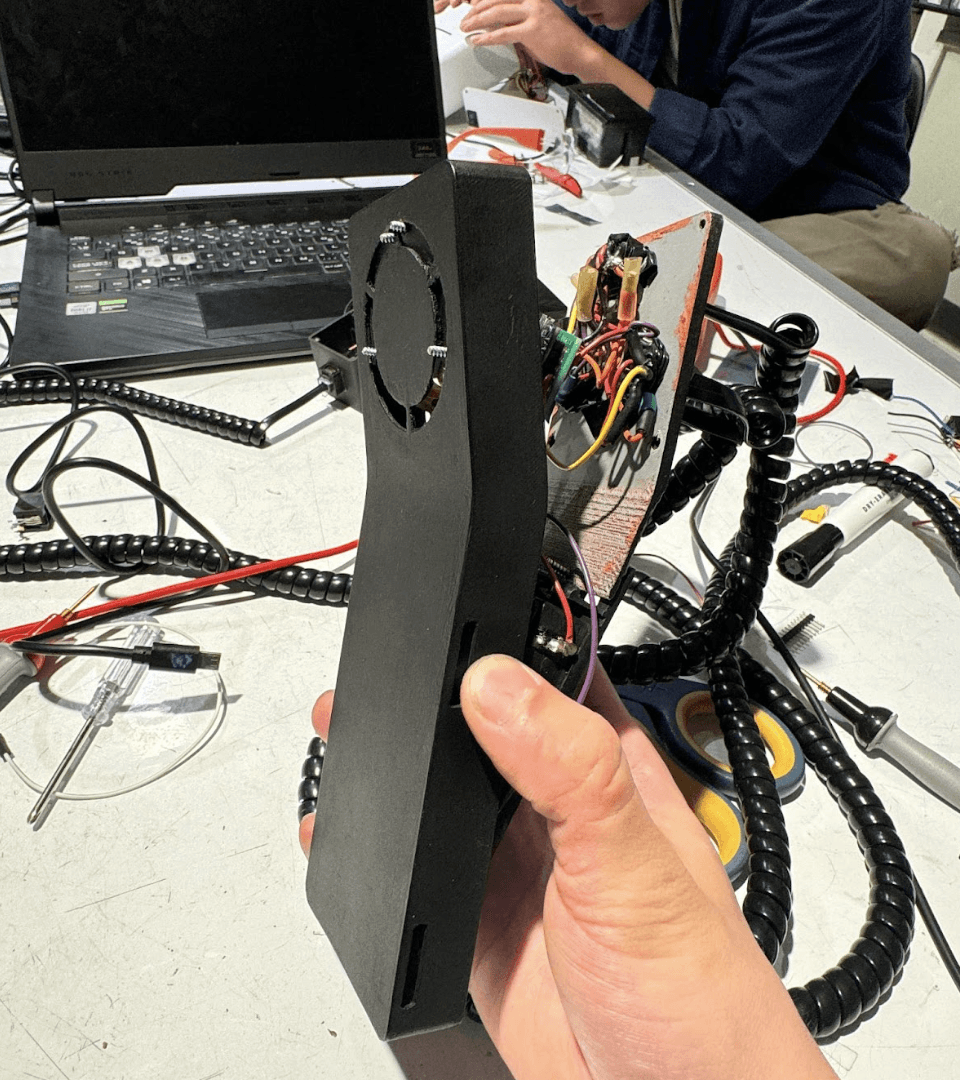
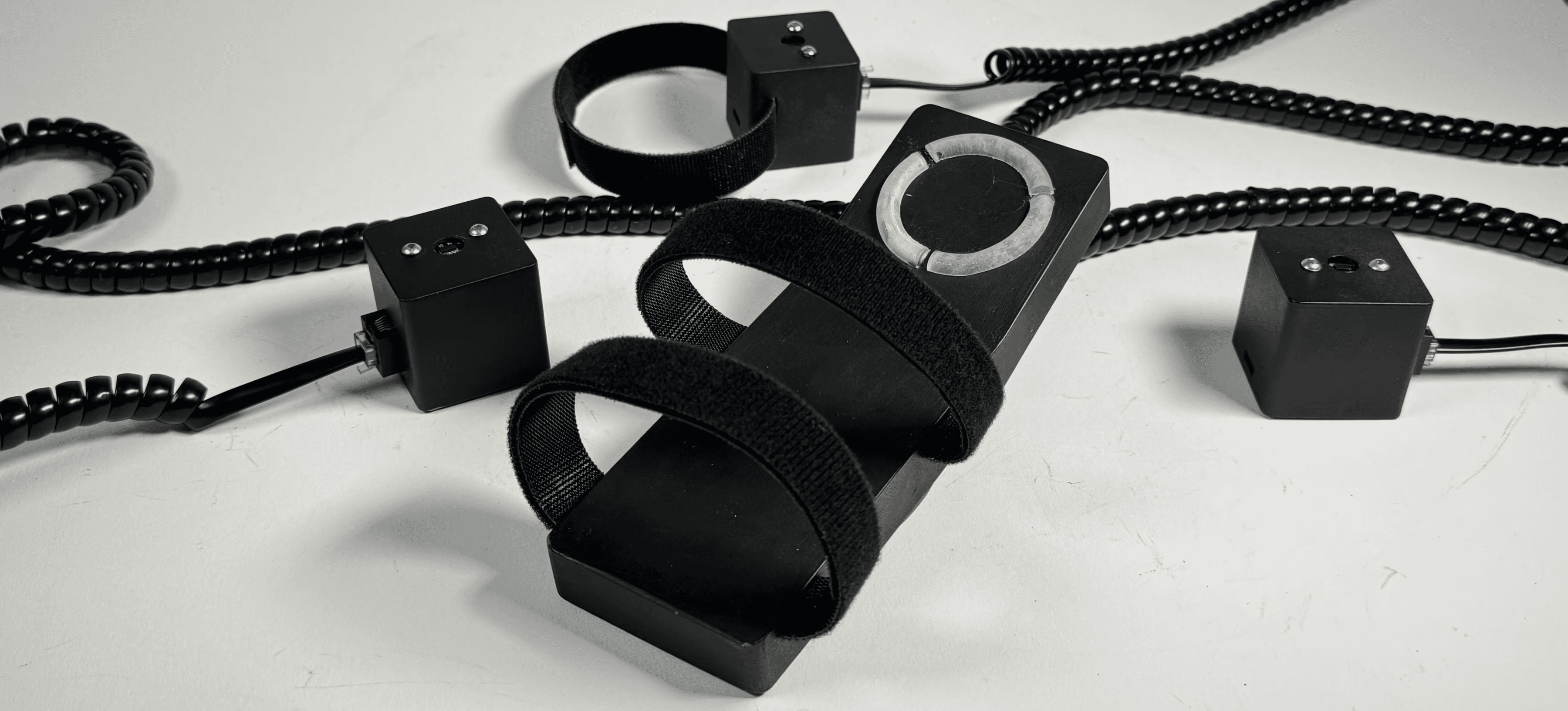
Full View with Telephone Cords

Full View with Telephone Cords

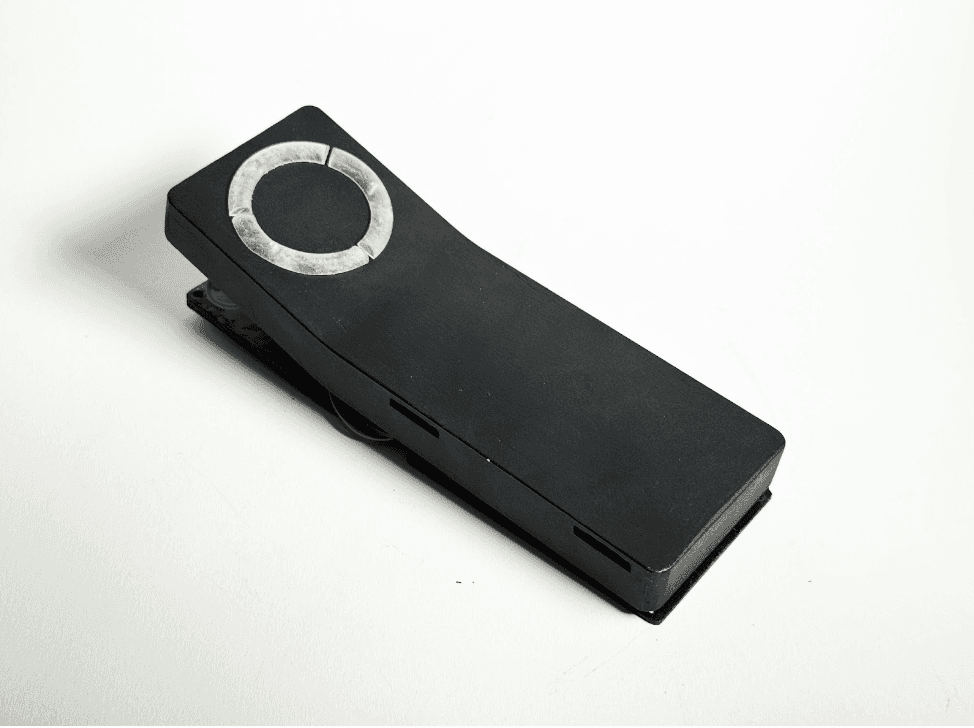
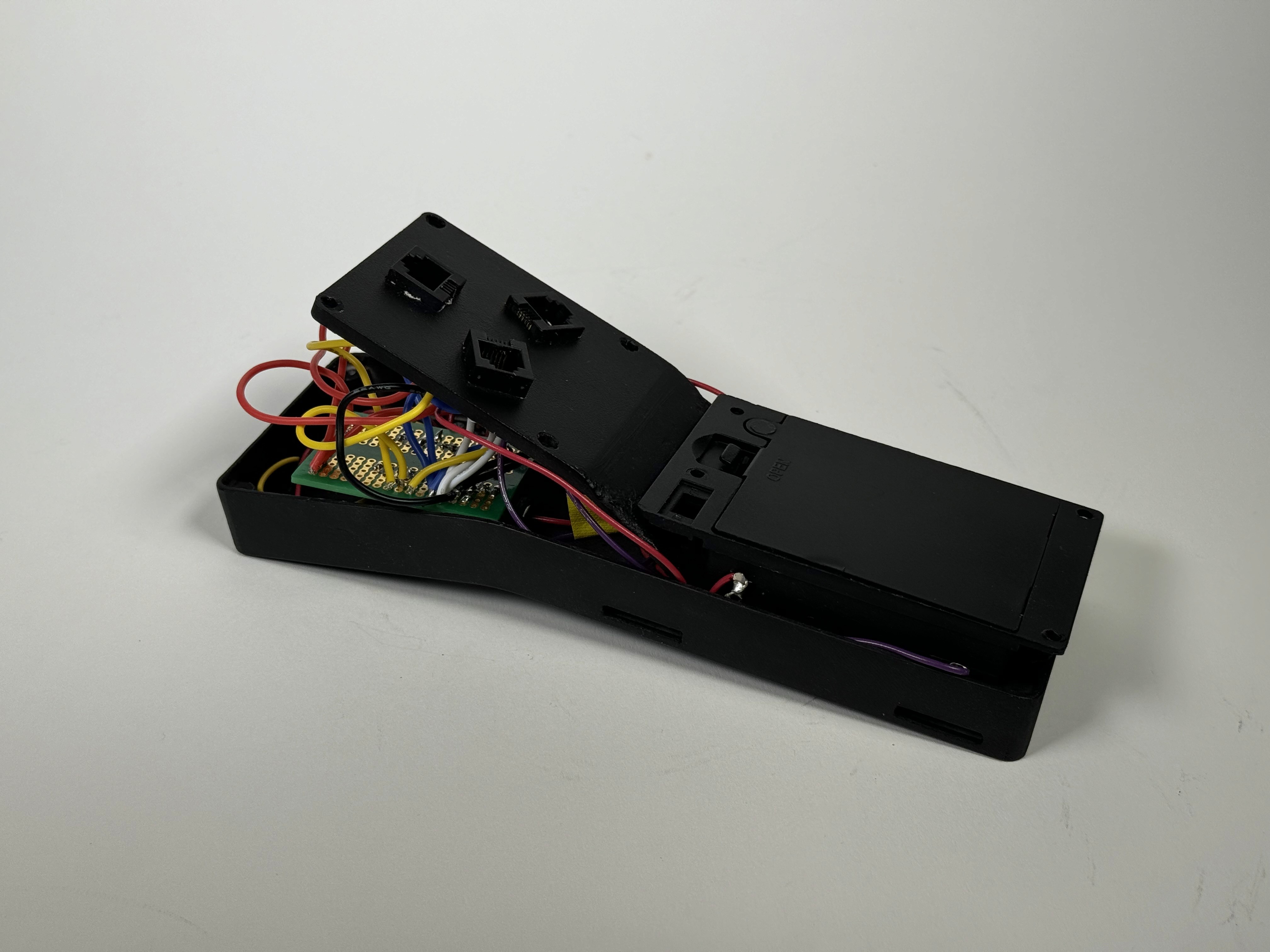
Main Interface: the Control Panel

Main Interface: the Control Panel

FEATURES:

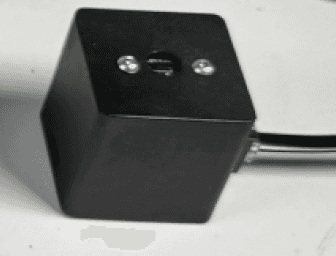
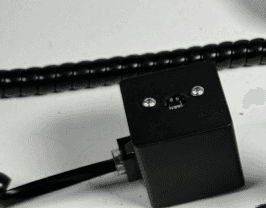
Main form of sensors for adaptability: laser distance sensors

Main form of sensors for adaptability: laser distance sensors

Main form of sensors for adaptability: laser distance sensors

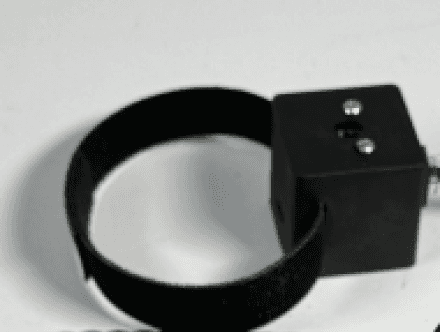
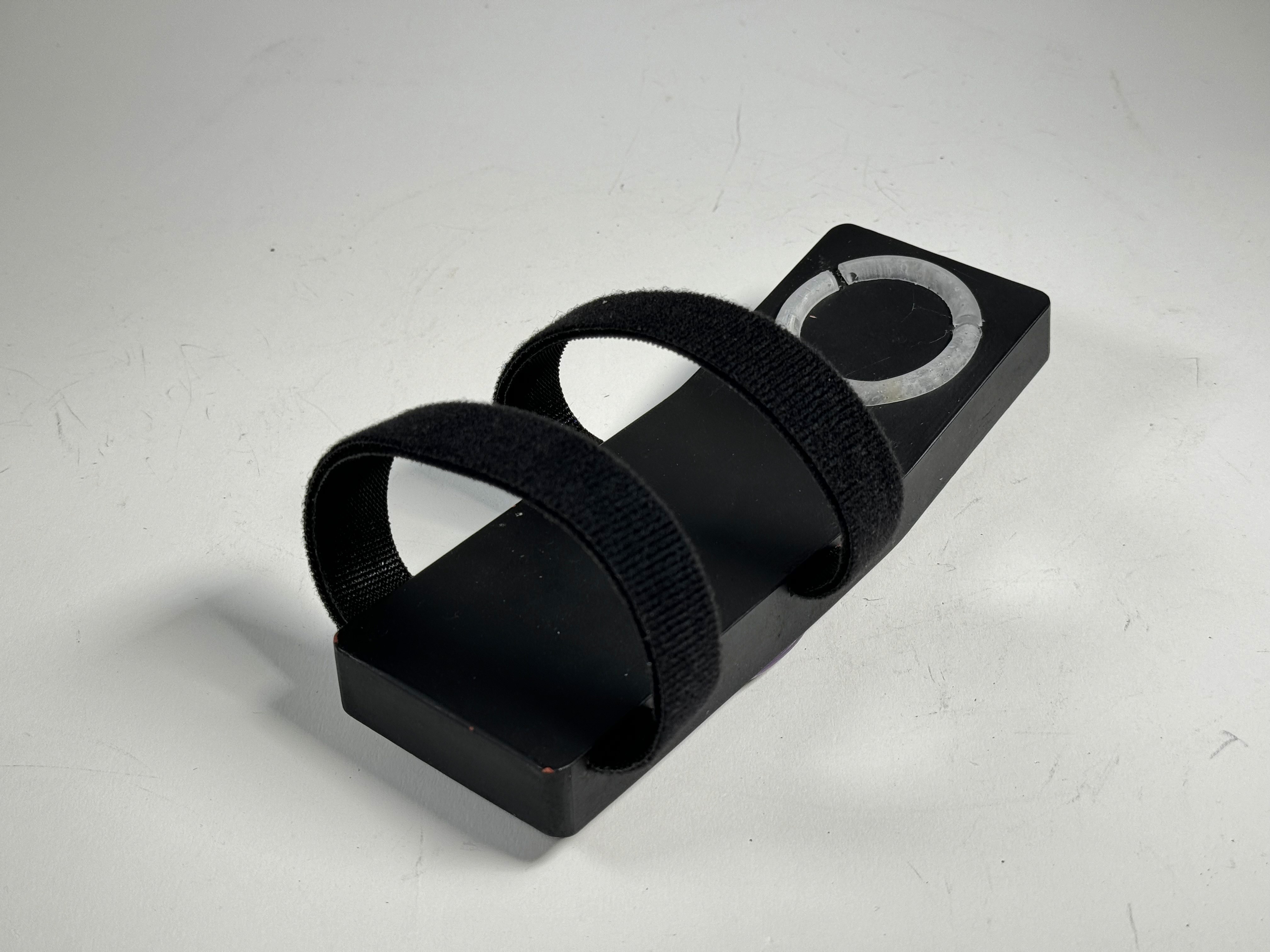
Promoting flexibility & ease of use: velcro straps as attachments

Promoting flexibility & ease of use: velcro straps as attachments

Promoting flexibility & ease of use: velcro straps as attachments

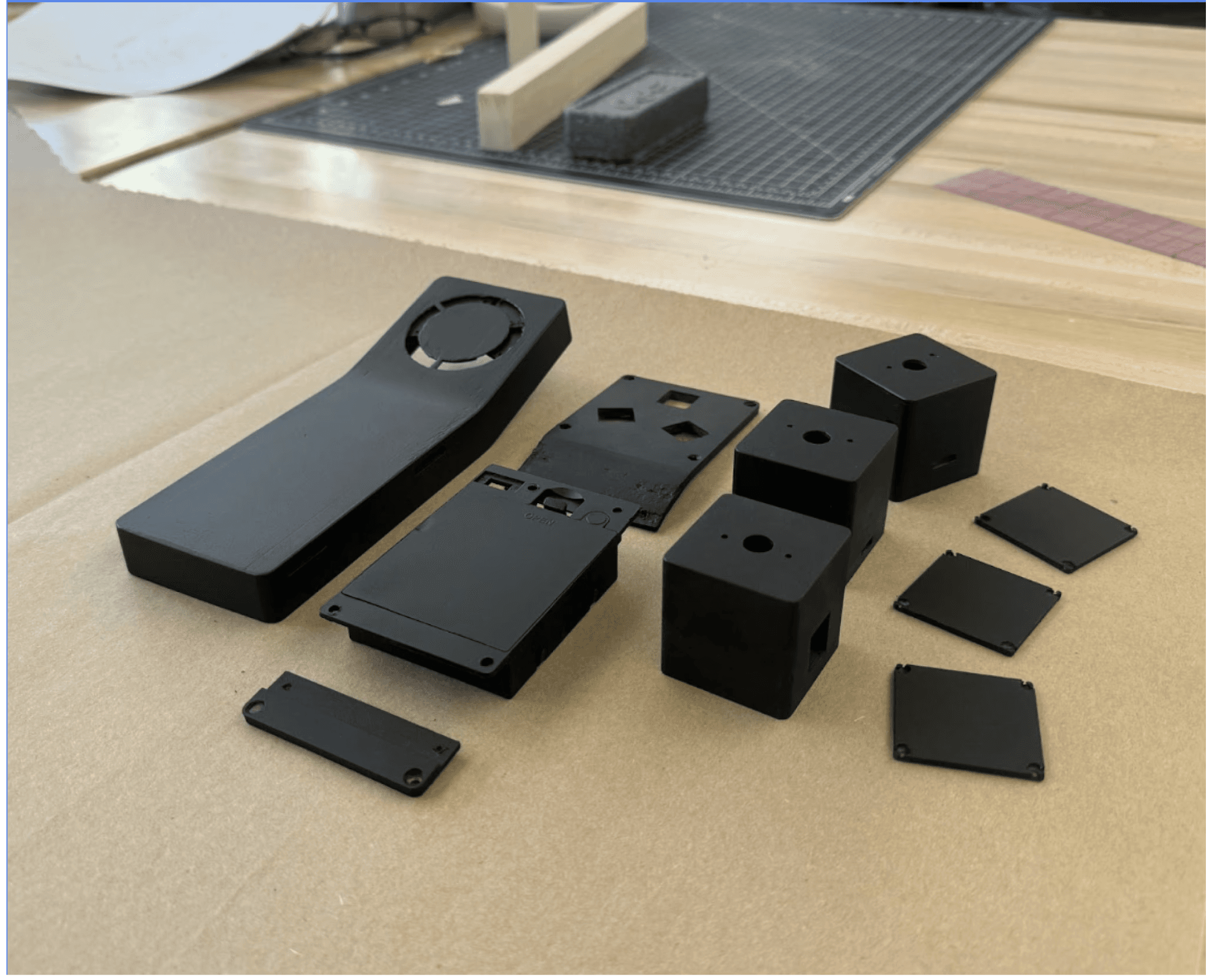
Refining our interface: spray painted parts for a polished finish

Refining our interface: spray painted parts for a polished finish

Refining our interface: spray painted parts for a polished finish

Promoting re-useablity: rechargeable battery compartment

Promoting re-useablity: rechargeable battery compartment

Promoting re-useablity: rechargeable battery compartment

IMPACT

It actually didn’t end up working on our demo day.


Our selling point backfired on us:

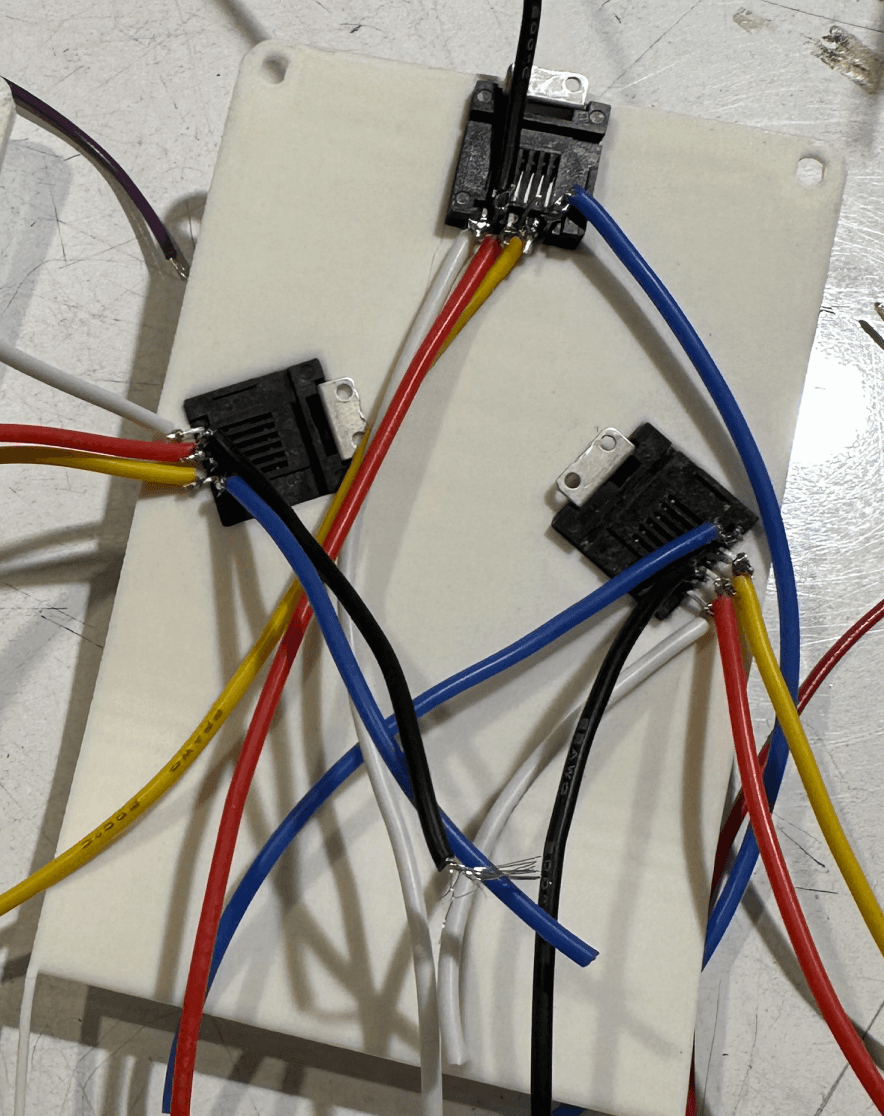
the jacks for connecting the telephone cords to our sensors were terribly fragile.


We didn't realize this until we started soldering and the metal parts easily broke with just a bit of applied force.


Instead we pivoted to refining the design.


Going into the project, the physical design was not necessarily our priority, but when it ended up being the only part of our project that we could show, we realized how important it actually was.


Many of her caregivers commented on how important personal style and expression is for our client, and having a device custom made for her gave her a lot of control over color, shape, etc. which often isn't an option for assistive devices that are mostly utilitarian.

SOME ISSUES
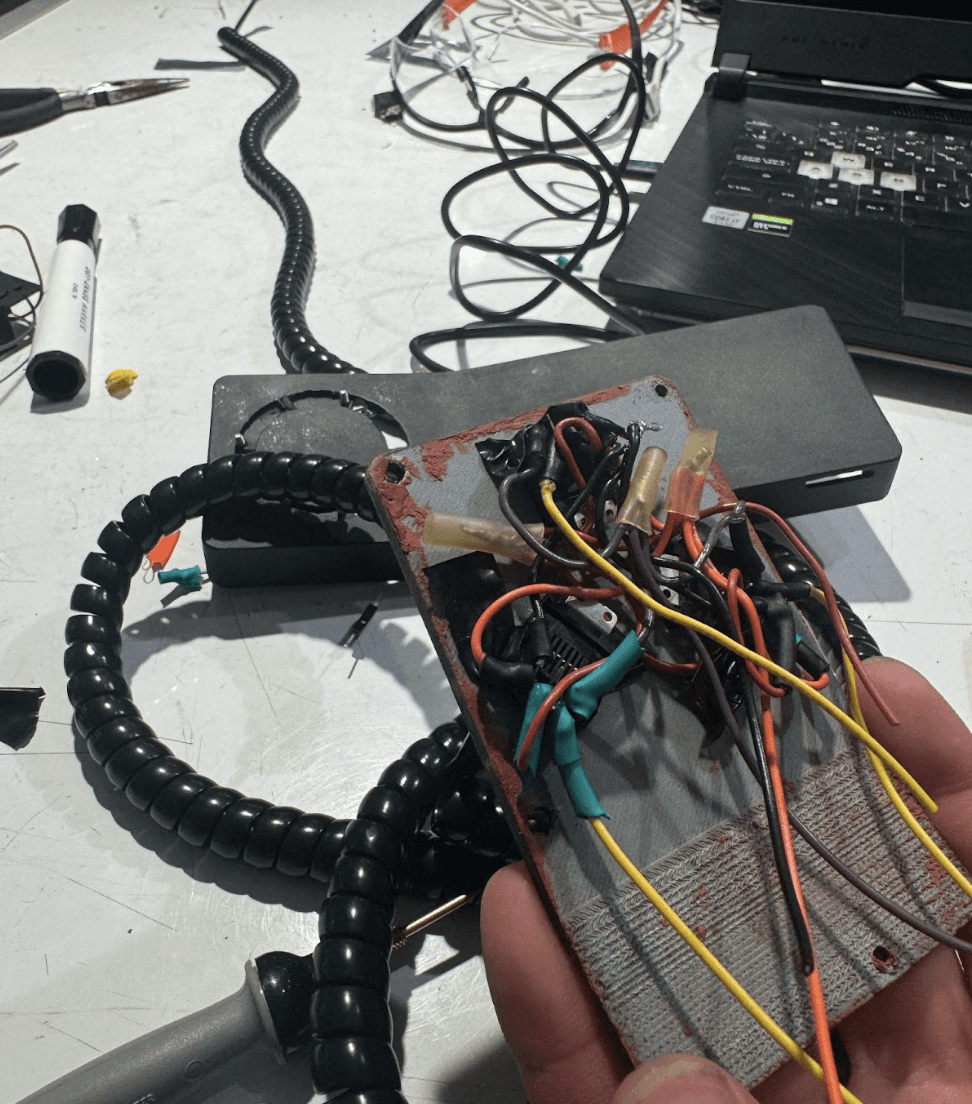
Non-human friendly jacks that rendered sensor connections unstable

Non-human friendly jacks that rendered sensor connections unstable

Non-human friendly jacks that rendered sensor connections unstable

Tight spacing that compressed already fragile parts

Tight spacing that compressed already fragile parts

Tight spacing that compressed already fragile parts

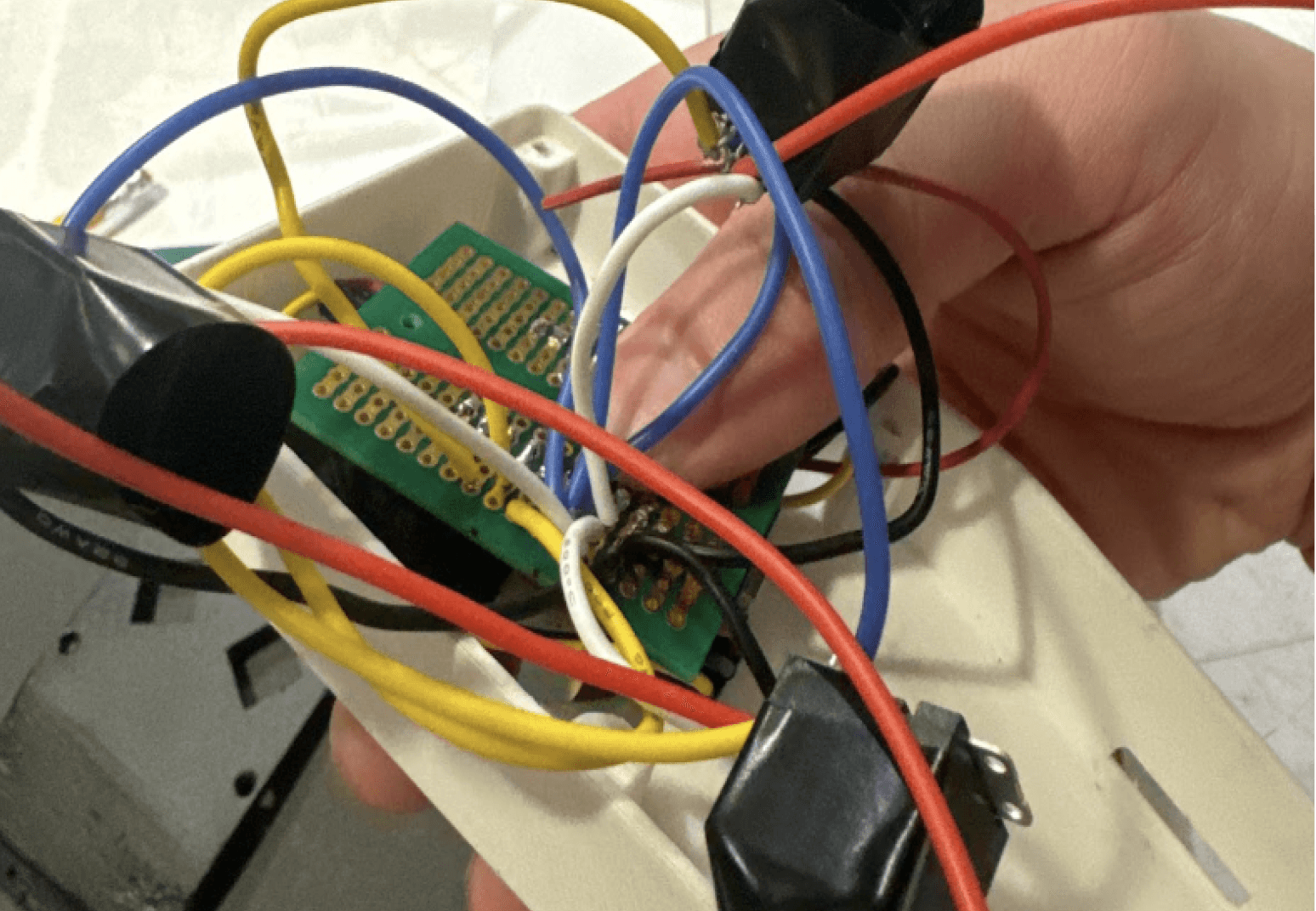
Loose wires causing eletrical shorting

Loose wires causing eletrical shorting

Loose wires causing eletrical shorting

USER RESEARCH

User Interviews

We conducted an in-depth 20-30 minute interview with our design client.


We discussed the daily workings of her life and what parts of her life that could be made more convenient in the context of her physical disability that requires her to navigate with a mobility chair.

Our Client

Maura is a fan of baseball, and she loves watching the Pittsburgh Pirates games.


Her favorite colors are red, orange, dark blue, while her favorite animals include dogs, cats, turtles.


To our surprise, her favorite sound is a dog barking, which we unfortunately didn't have the chance to incorporate into our design after cutting audio.

INSIGHTS

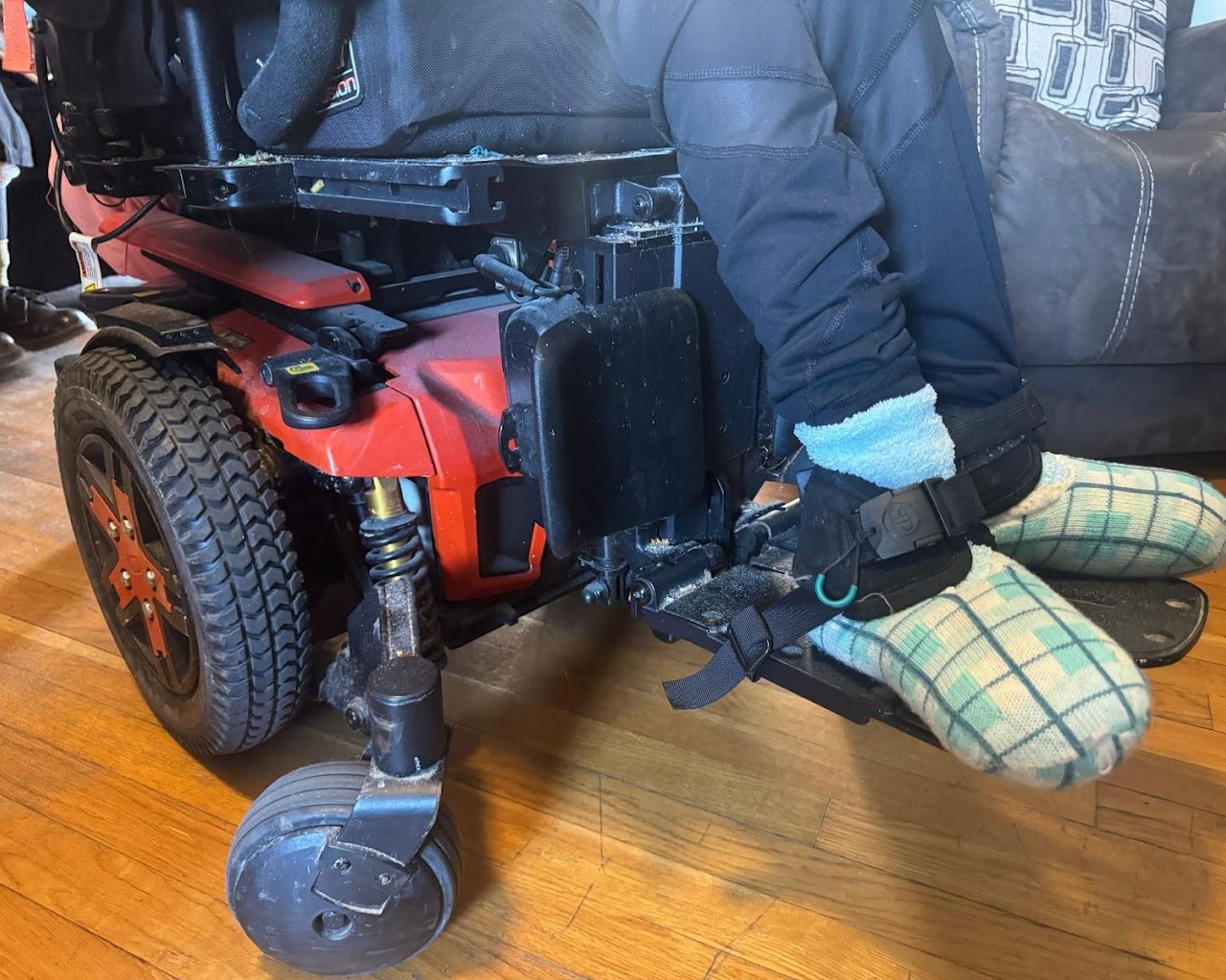
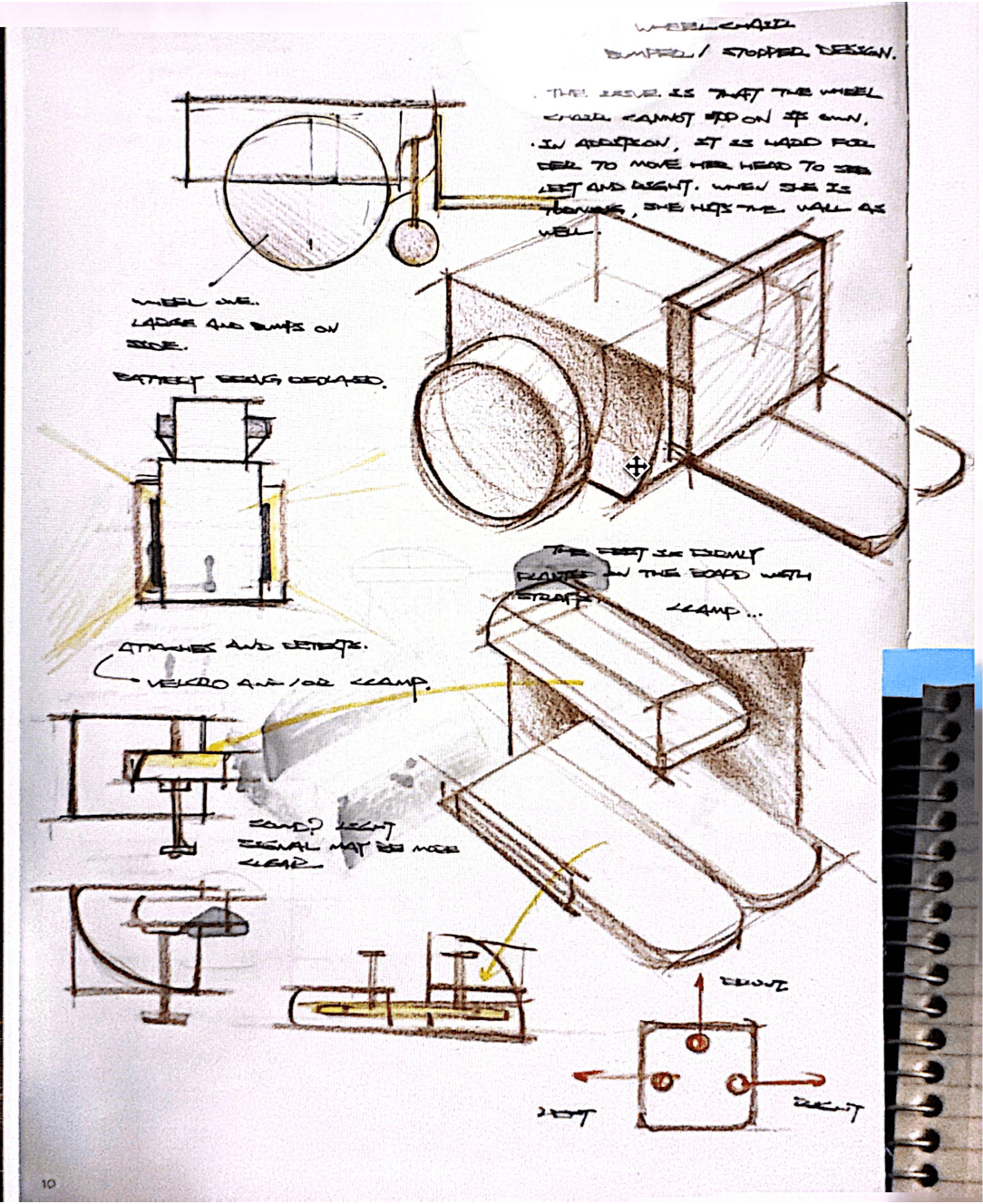
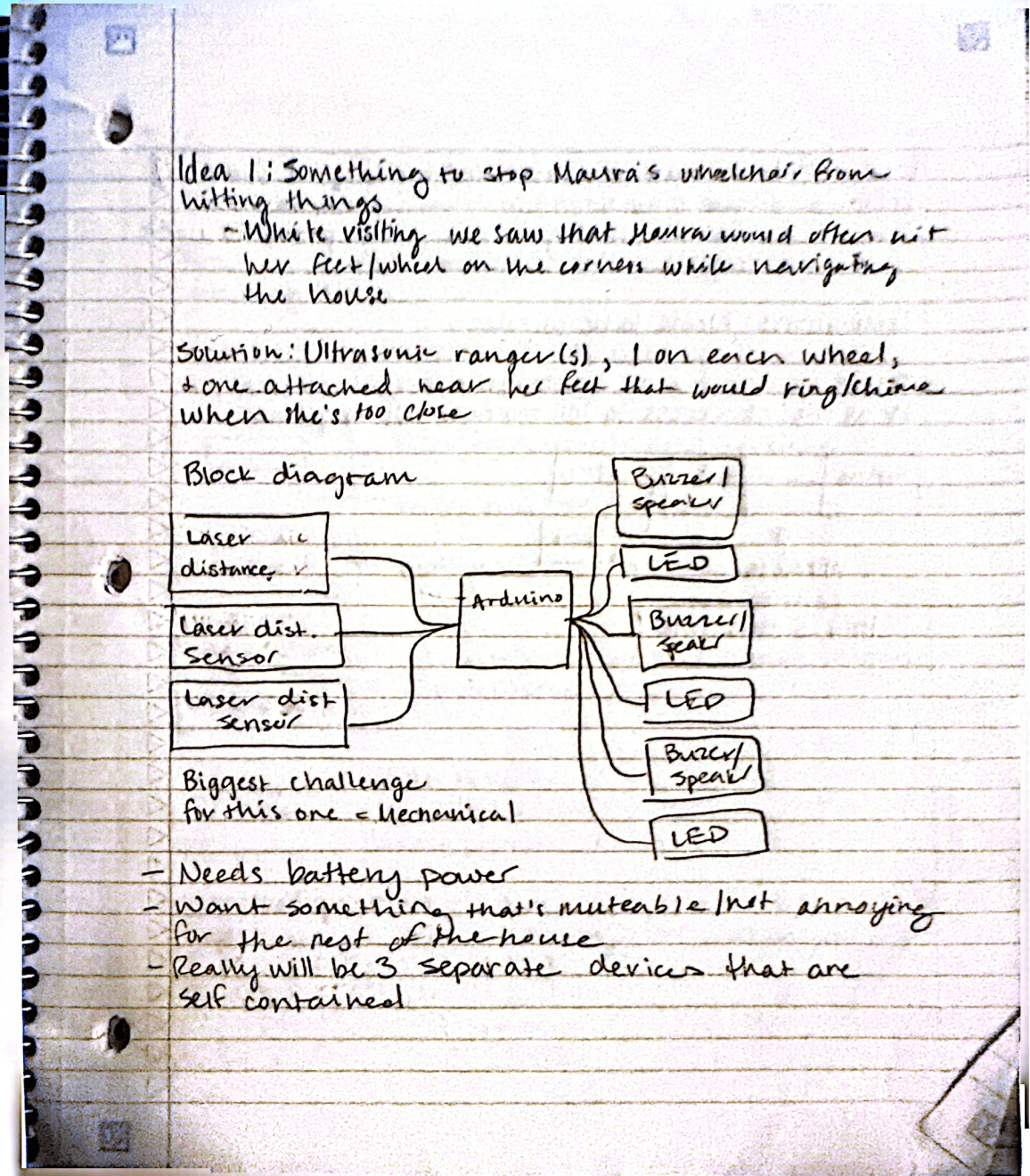
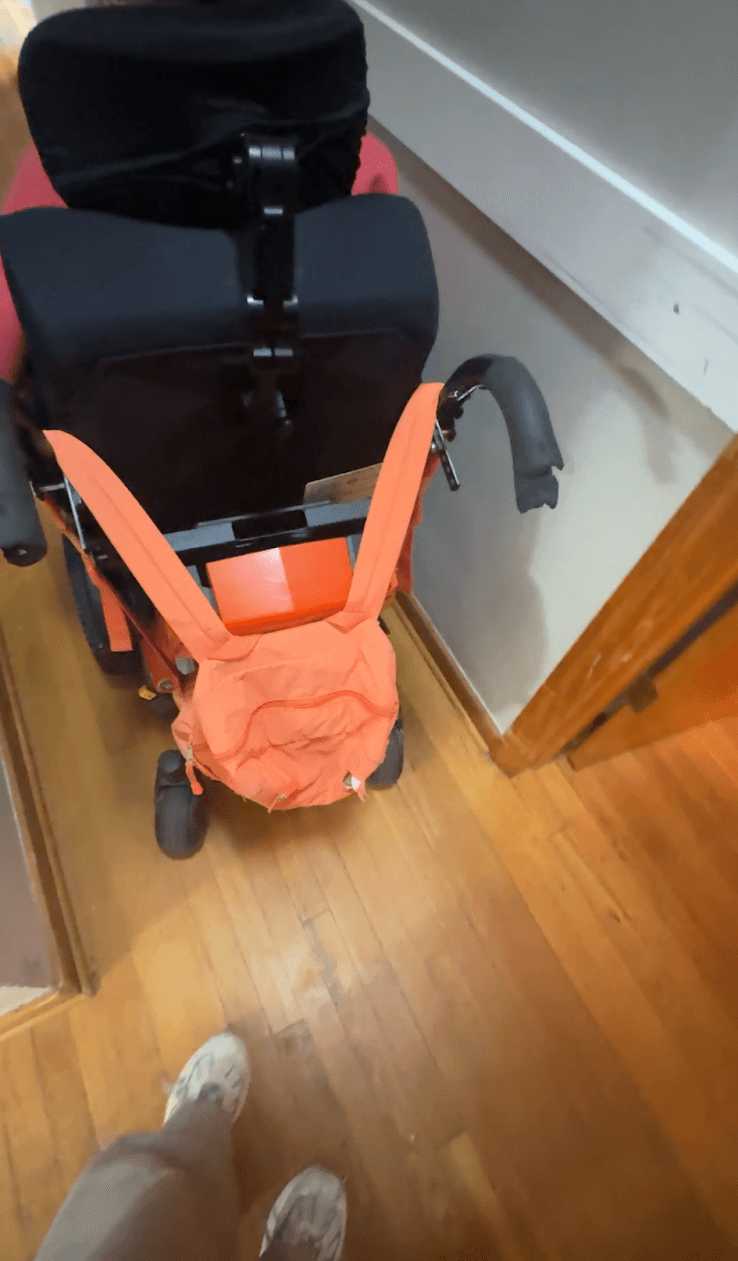
As a wheelchair user, we found the main pain points included navigation, especially in tighter and more enclosed environments.
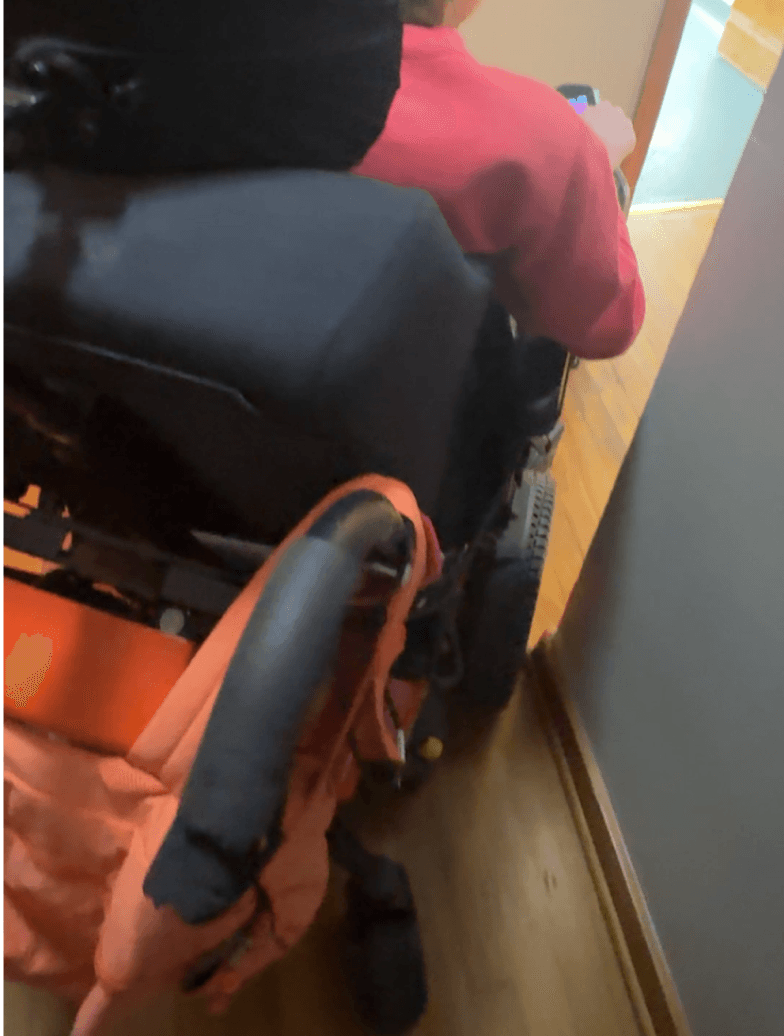
Wheels scraping against wall corners

Wheels scraping against wall corners

Wheels scraping against wall corners

Little breathing room in hallways

Little breathing room in hallways

Little breathing room in hallways

Feet vulnerable to front collisons

Feet vulnerable to front collisons

Feet vulnerable to front collisons

Ideation & Iteration

Ideation & Iteration

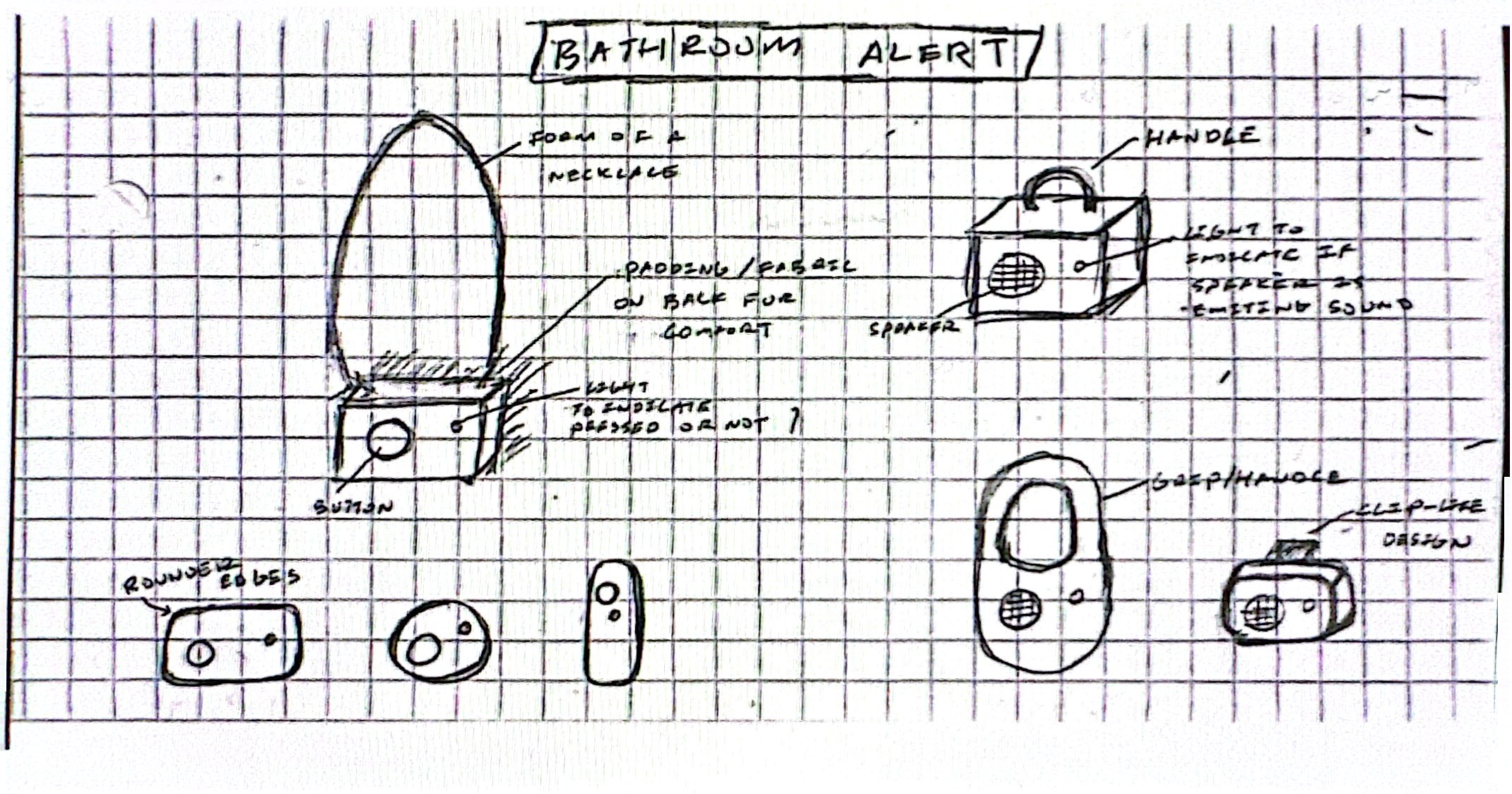
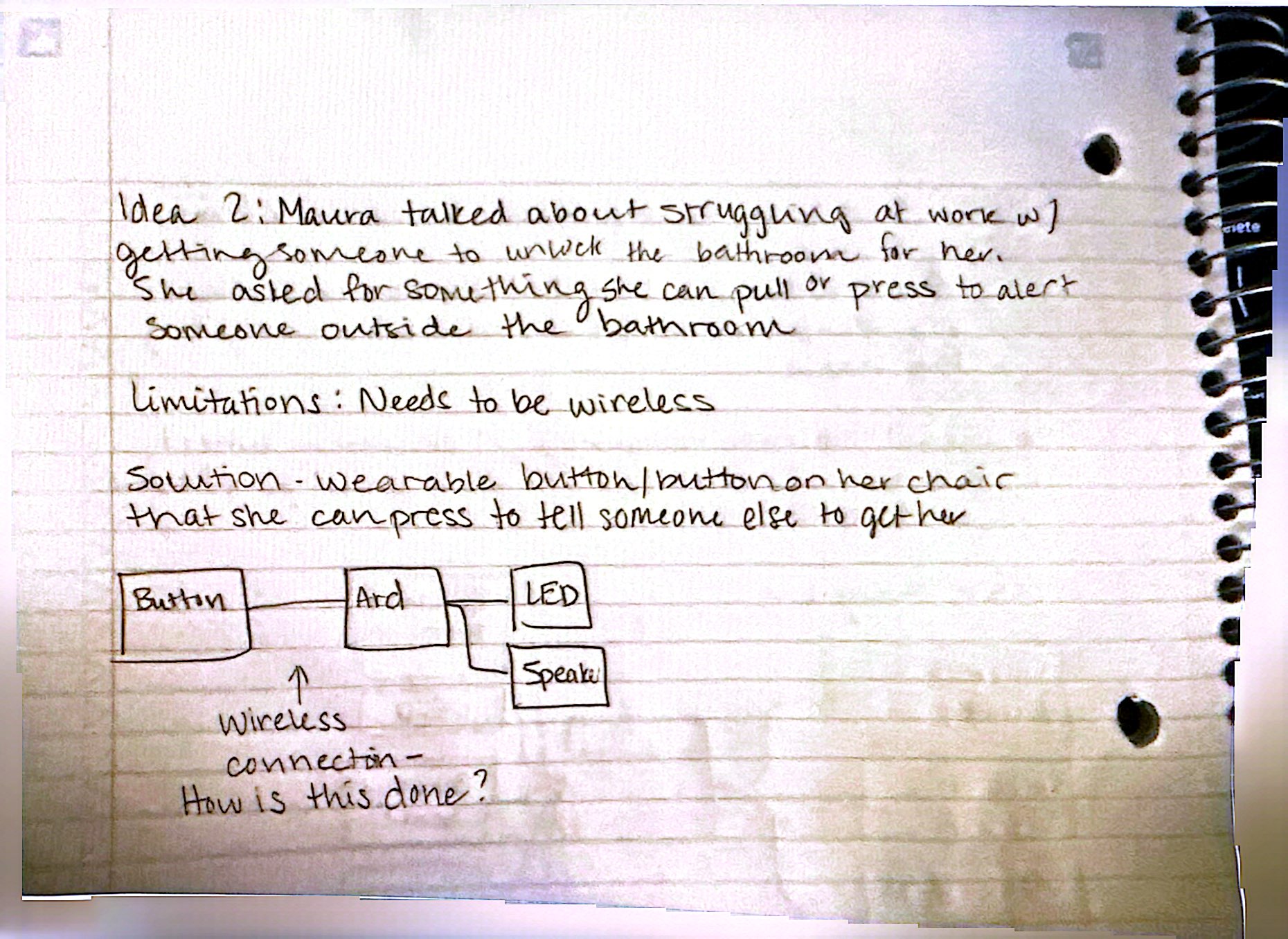
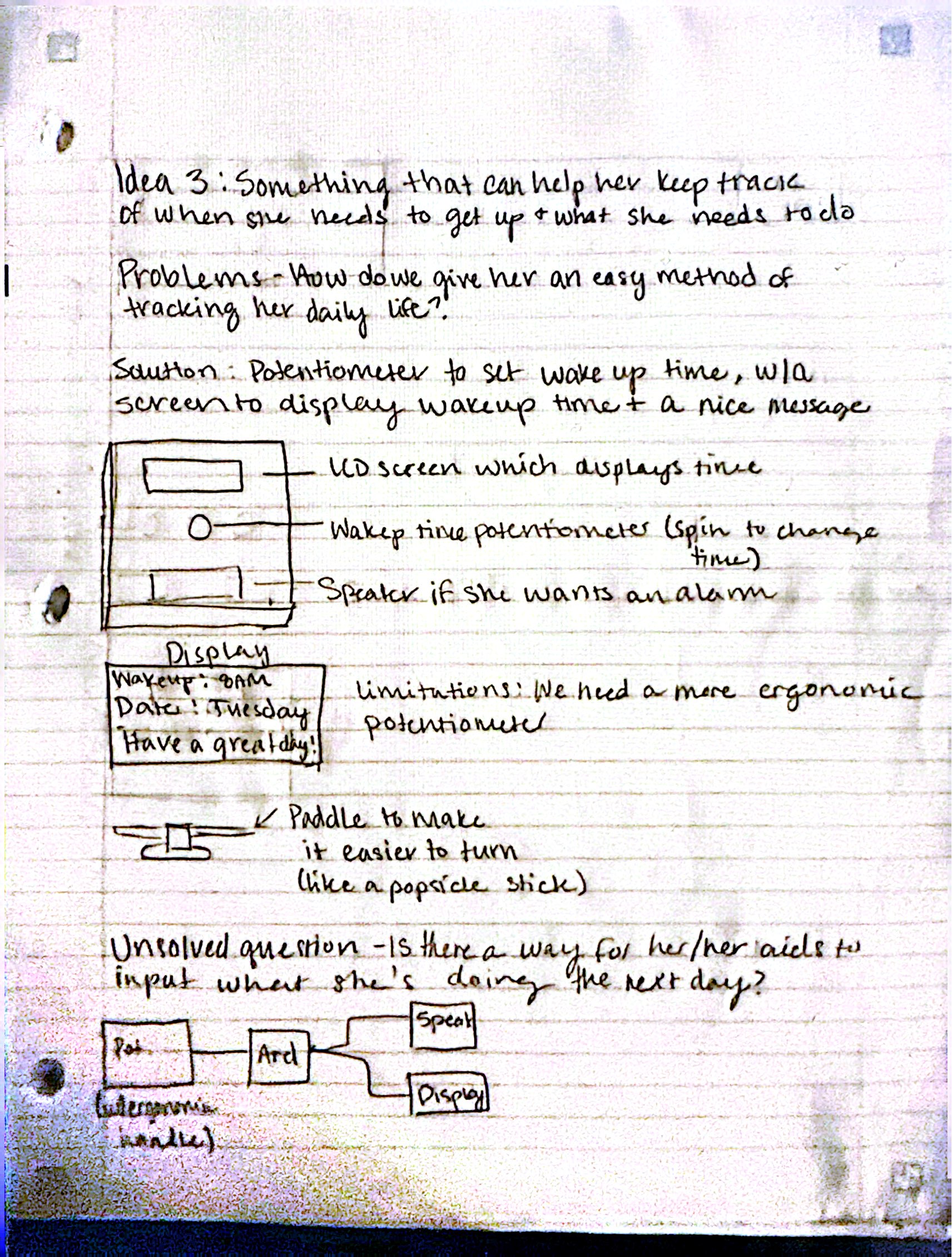
Low-fi sketches + ideas

Ideas mentioned:

  • Accessible button to alert others to assist her after using the restroom

  • Help with morning reminders

PROTOTYPING

Where it all started!
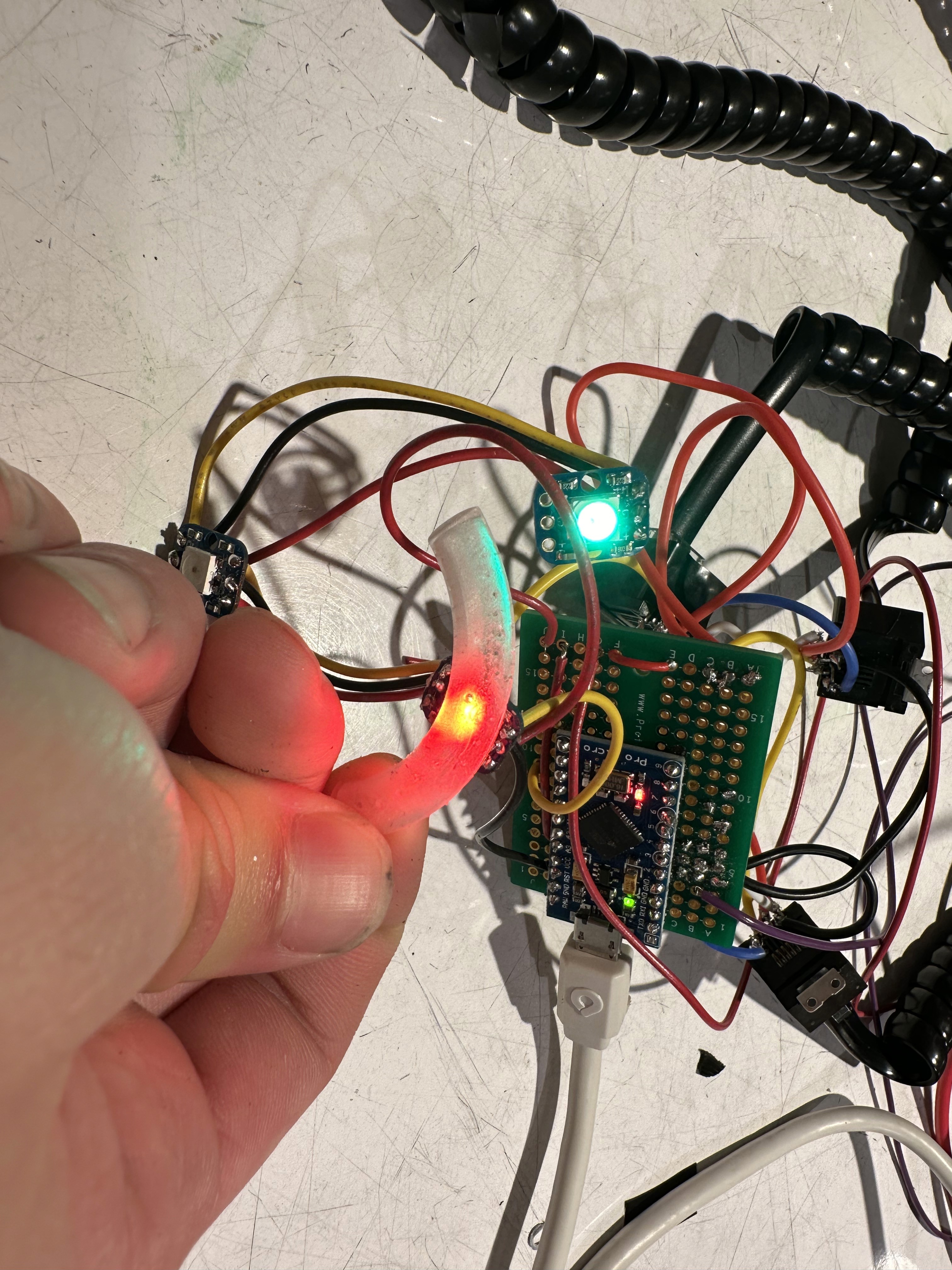
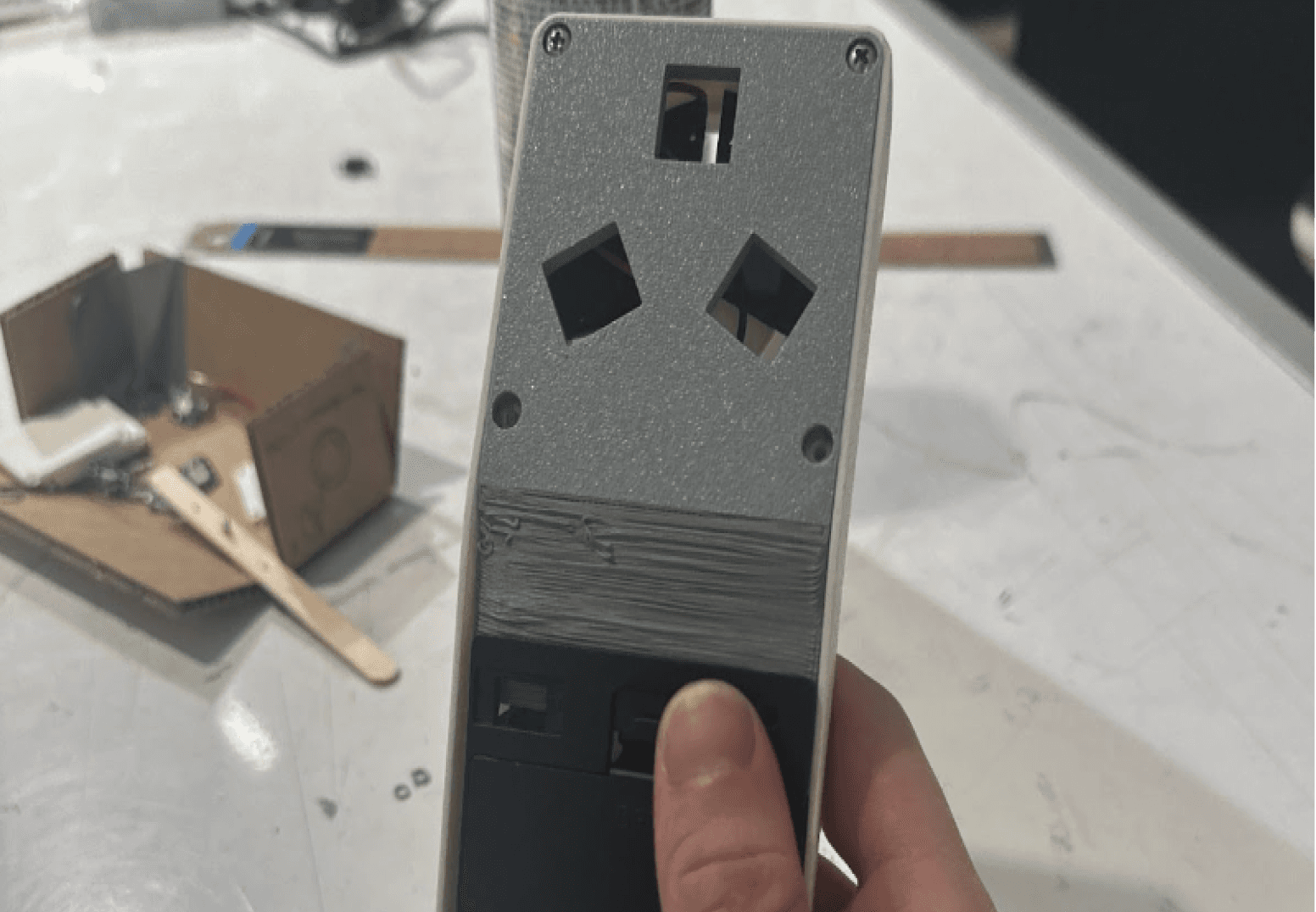
Checking visibility of LED's through 3D printed parts

Checking visibility of LED's through 3D printed parts

Checking visibility of LED's through 3D printed parts

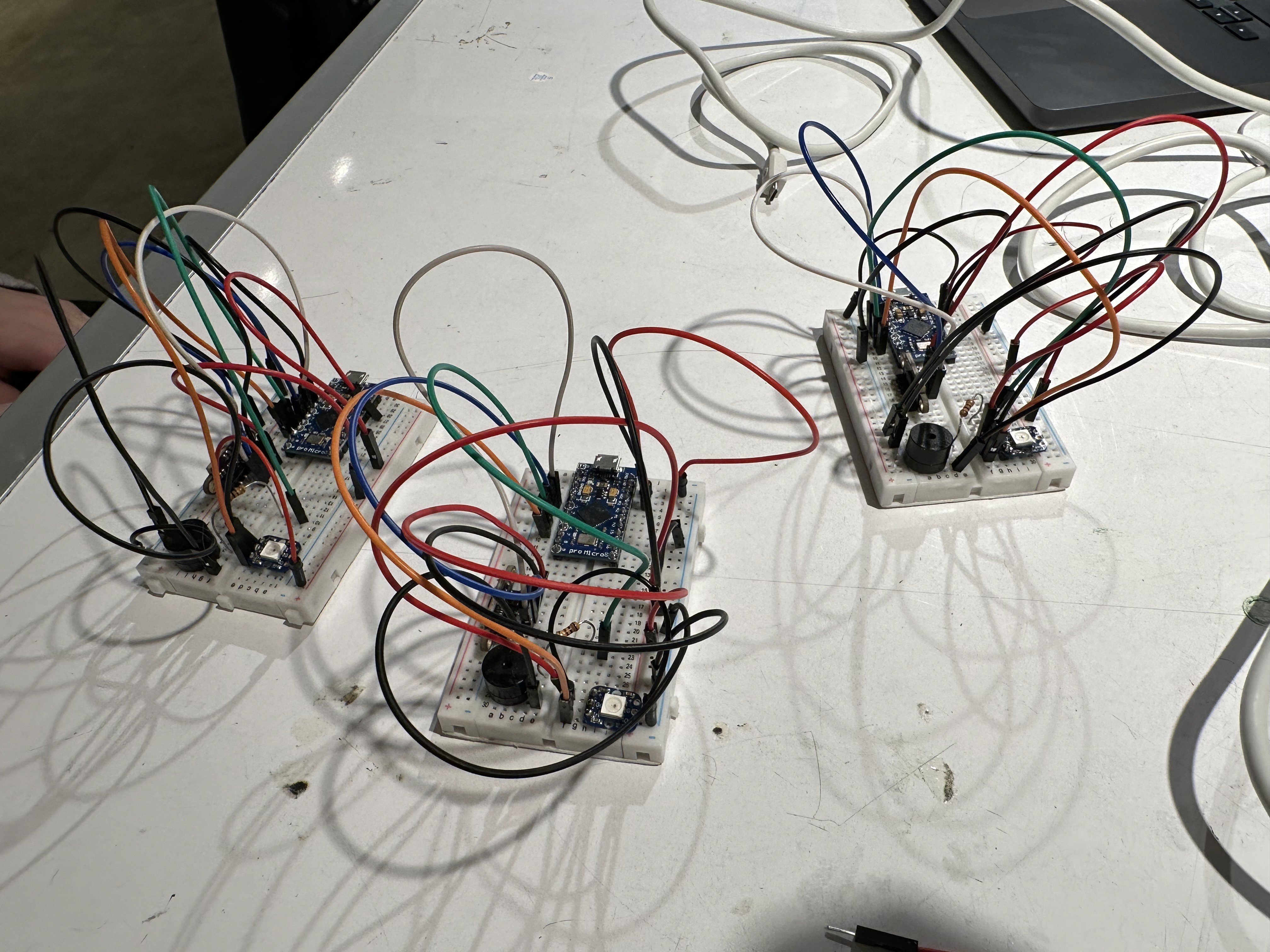
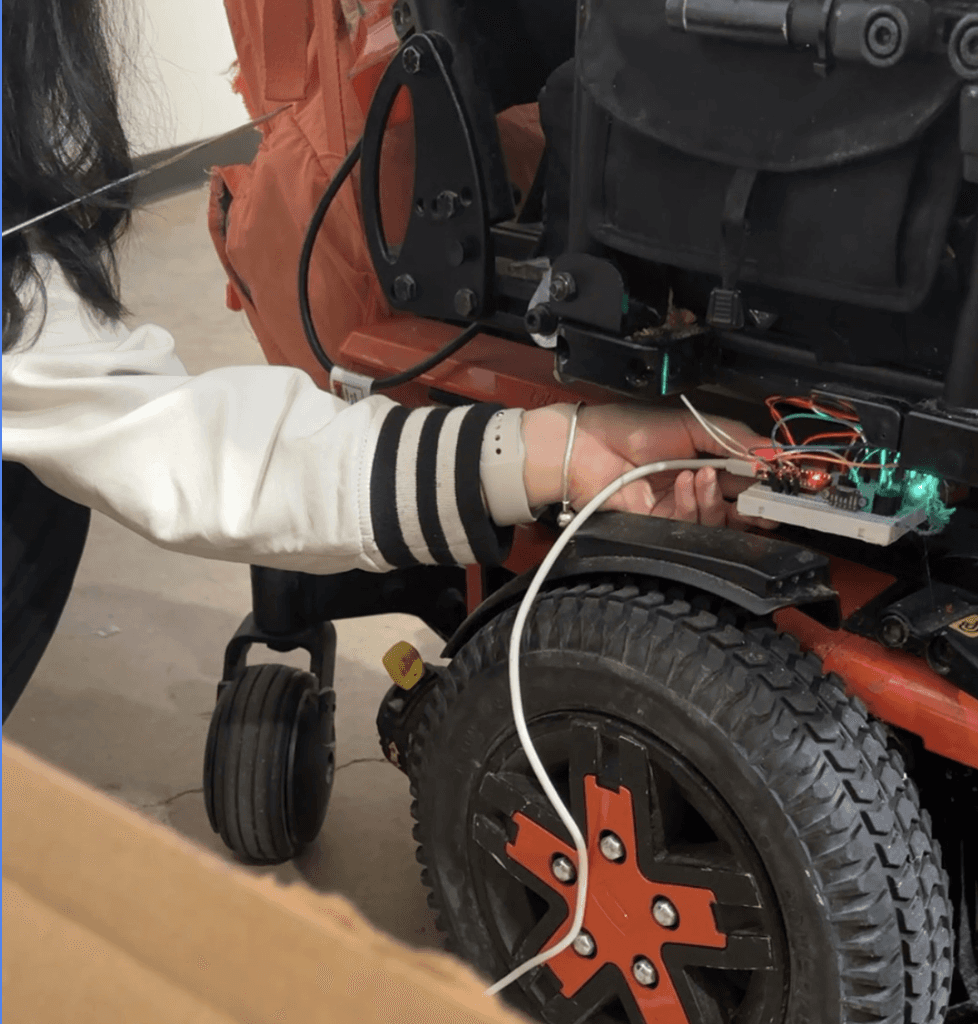
Testing feasibility: Intial prototyping wth breadboards

Testing feasibility: Intial prototyping wth breadboards

Testing feasibility: Intial prototyping wth breadboards

Fitting plates together to adjust for seamless fitting

Fitting plates together to adjust for seamless fitting

Fitting plates together to adjust for seamless fitting

First fitting test of parts into our compartment

First fitting test of parts into our compartment

First fitting test of parts into our compartment

USER TESTING

USER TESTING

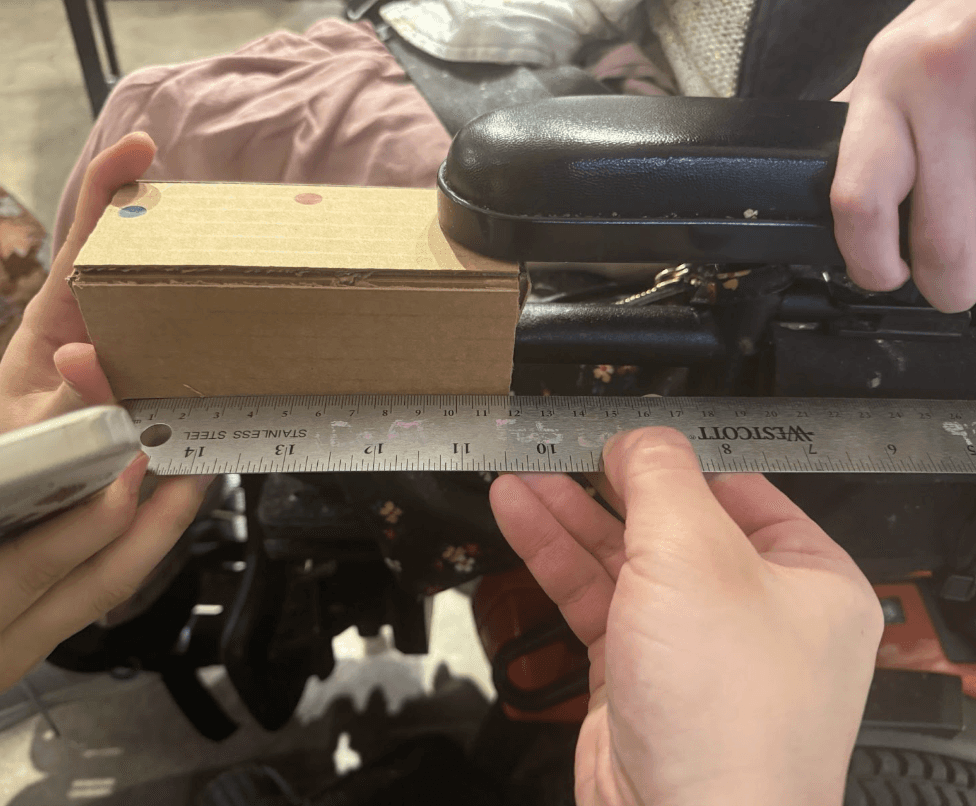
Finding a smoother fit for our device: under the armchair

Finding a smoother fit for our device: under the armchair

Finding a smoother fit for our device: under the armchair

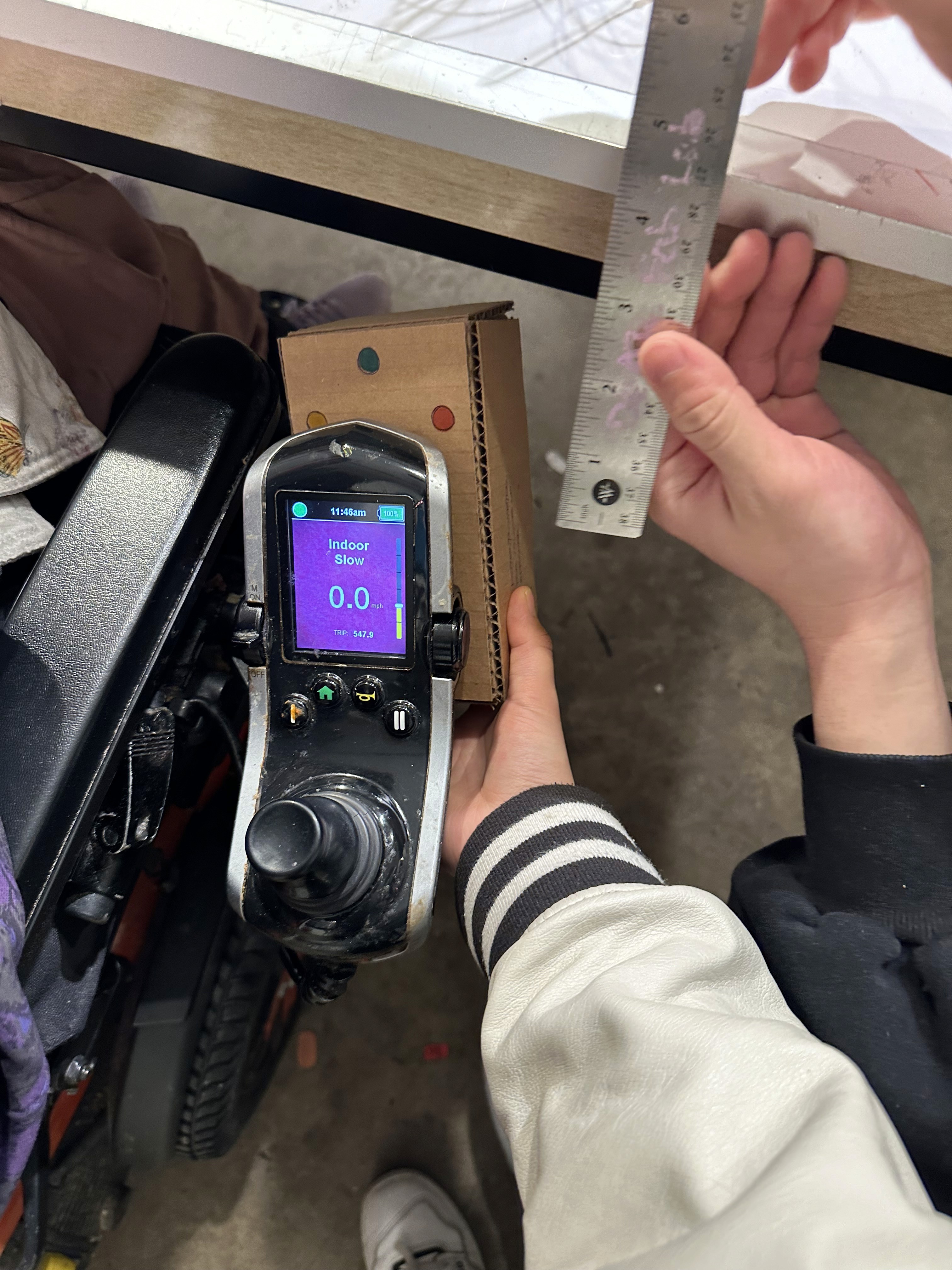
Uneven surface of controller rendered our intial attachment area as unfeasible.

Uneven surface of controller rendered our intial attachment area as unfeasible.

Uneven surface of controller rendered our intial attachment area as unfeasible.

Testing our client's distances of comfort with rough prototypes

Testing our client's distances of comfort with rough prototypes

Testing our client's distances of comfort with rough prototypes

Our main questions we wanted to address from this testing:

How should we attach the device to Maura's chair?

How should we attach the device to Maura's chair?

How should we attach the device to Maura's chair?

How can we connect each individual component (the three sensors and the control module) In a way that doesn't interfere with the mobility of the chair or create a tripping hazard?

How can we connect each individual component (the three sensors and the control module) In a way that doesn't interfere with the mobility of the chair or create a tripping hazard?

How can we connect each individual component (the three sensors and the control module) In a way that doesn't interfere with the mobility of the chair or create a tripping hazard?

What distances are ideal for the distance sensors?

What distances are ideal for the distance sensors?

What distances are ideal for the distance sensors?

What kind of alert system would work best for Maura and her caregivers?

What kind of alert system would work best for Maura and her caregivers?

What kind of alert system would work best for Maura and her caregivers?

TAKEAWAYS

I learned a lot during the experience, here are the top 3:

Hofstadter's law


It always takes longer than you expect, even when you take into account Hofstadter's law. Part of the reason we couldn't get our device to work on time was bceause we underestimated the time required to stress test it.

Test.Test.Test.TEST!!!


Test in increments, especially early as you're iterating with new materials and ideas. When we got to our testing stage, we realized how unreliable our hardware was, but it was too late to order new parts. This could have been addressed with earlier testing!

Create more low-fi prototypes


One issue was underestimating the space constraints for our device because we finalized prints that were hard to change without testing enough with low-fi materials like cardboard.

Let's talk!

Send me your favorite quote :)

Let's talk!

Send me your favorite quote :)

Let's talk!

Send me your favorite quote :)